
Most frontline teams don't have a motivation problem. They have a friction problem: scattered manuals, repeated questions, paper forms, and managers who spend more time chasing updates than coaching people.
AI-powered workforce platforms remove that friction. Instead of replacing people, they take over the repetitive work around training, onboarding, task routing and reporting, so employees can focus on the work that moves the business forward. Here are seven practical ways it helps.
The seven ways, in plain terms
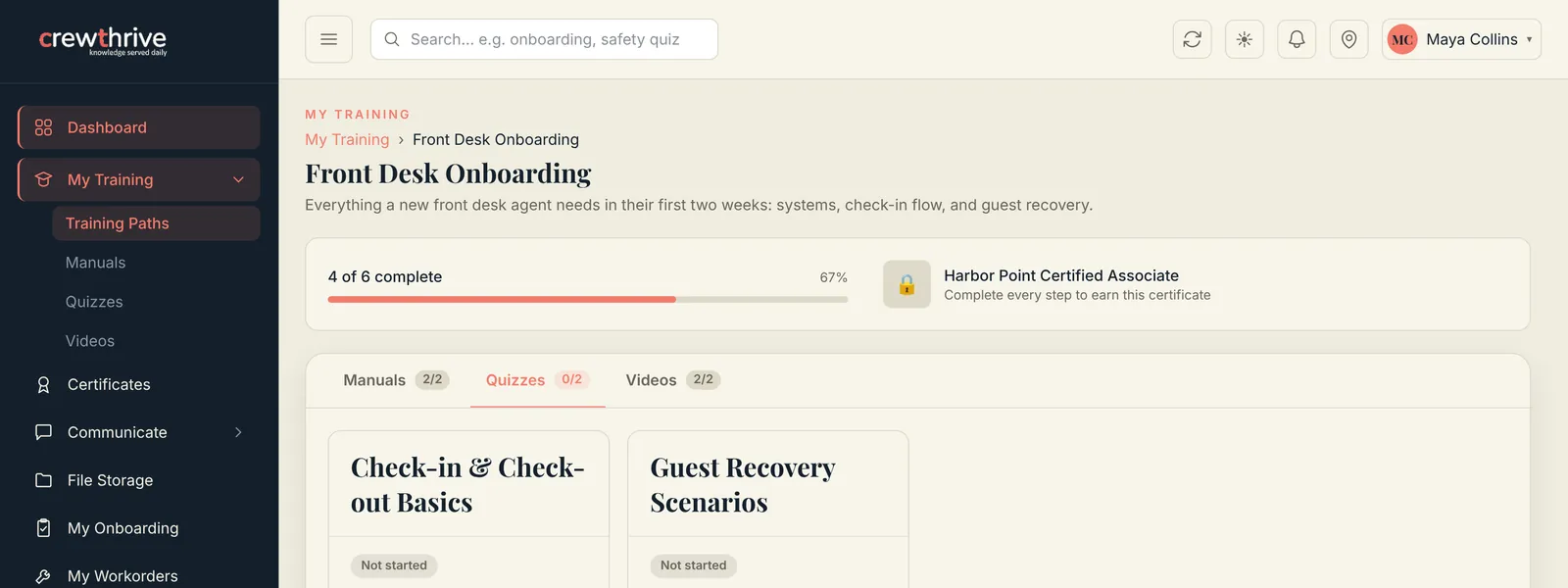
1. Personalized training paths for every role
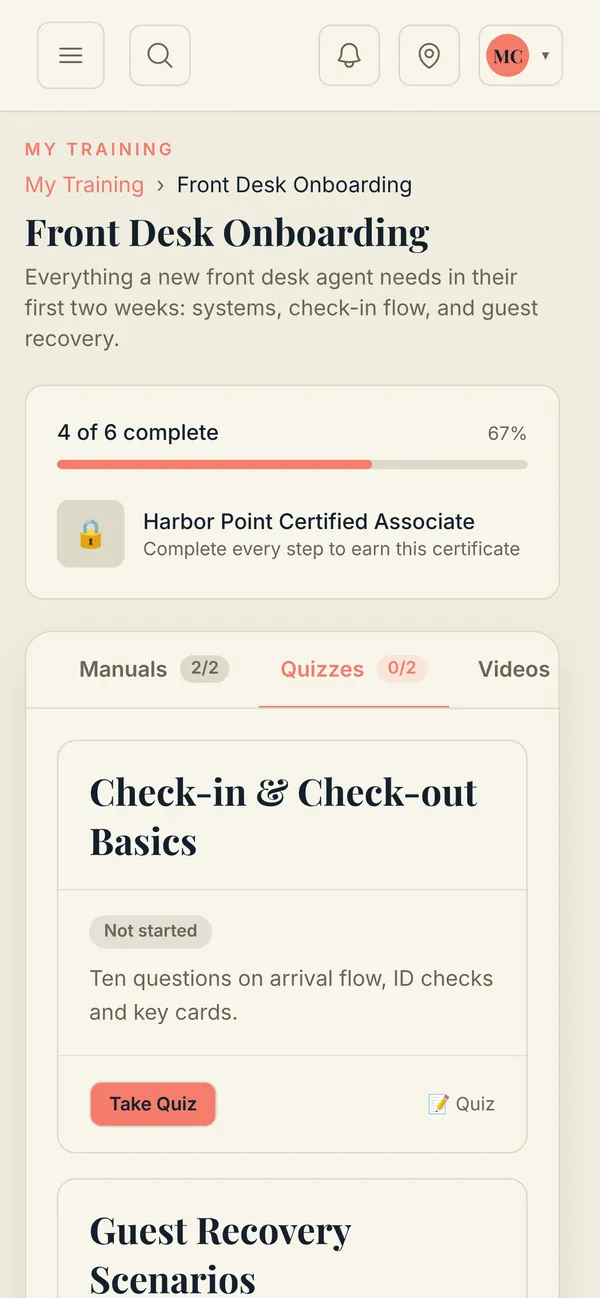
A one-size-fits-all training deck wastes the time of experienced staff and overwhelms new hires. AI can assemble learning paths around a person's role, experience and responsibilities, combining manuals, videos and quizzes into one journey.
- Less repetition: experienced employees skip what they already know.
- Clear progress: everyone sees what's done, what's next, and when a certificate unlocks.
- Fewer gaps: assign by employee, team or whole property in a few clicks.
2. Manuals and quizzes in minutes, not weeks
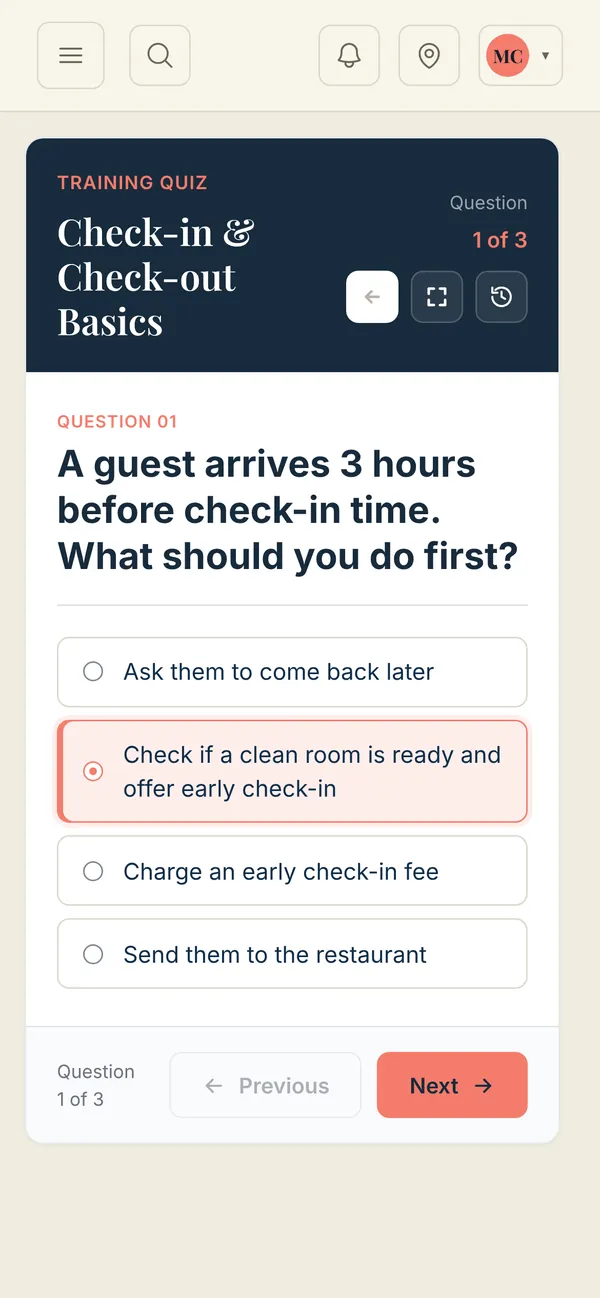
Writing a training manual from scratch can take days, and updating it is the task nobody gets to. Generate a custom manual from a prompt or a template, then turn it into a quiz with one click.
When a policy changes, the material can be refreshed right away, so people train on what's true today, not last year's PDF.
Where manager hours go, before and after AI
Illustrative hours per week on common management tasks
Illustrative figures for explanation only. Real results vary by team, industry and setup.
3. Instant answers from a knowledge base agent
Every manager knows the pattern: the same ten questions from every new hire, at the worst possible moment. A knowledge base agent trained on your own manuals, SOPs and policies answers on demand, in plain language, at any hour.
- Faster: an answer in seconds instead of waiting for a manager.
- Consistent: everyone gets the same approved answer from the same source.
- Focused: leaders coach instead of repeating themselves.
4. Paperless onboarding that starts before day one
The first weeks set the tone for performance and for a new hire's decision to stay. AI-assisted onboarding assigns the right forms, training and introductions automatically, and follows up when something is missing.
Dynamic forms, sign-offs and automated reminders replace the clipboard-and-email routine, so new employees arrive with paperwork done and a clear plan for week one.
Ramp-up: new-hire readiness over 12 weeks
Illustrative share of role requirements completed
Illustrative curve to show the concept, not measured customer data.
5. Smarter work orders and checklists
Repair requests, inspections and daily tasks often live in texts, sticky notes and memory. Centralizing work orders, and using AI to categorize and route them, puts the right task in front of the right person at the right time.
- Requests are captured once, from any device, with the details needed to act.
- Status is visible to everyone, so nobody asks "did that get done?"
- Patterns surface over time, pointing to root causes.
6. Reports that show who is ready
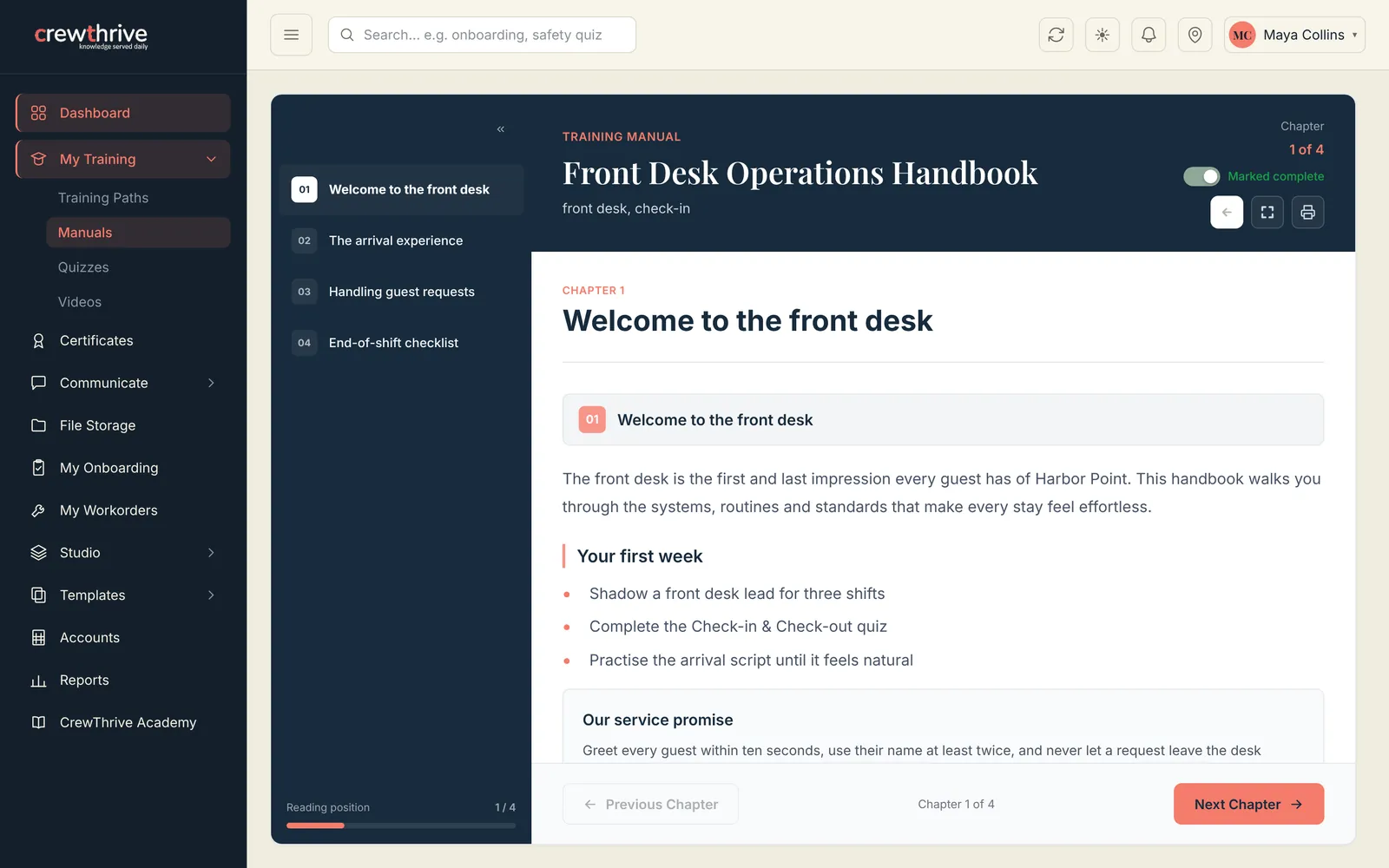
Reports only help if people open them. Build a chart once, such as training completions, quiz pass rates or work orders by status, save it, and pin it to one dashboard.
Instead of month-end spreadsheets, leaders see who's ready, which locations need attention and where knowledge gaps are forming, while there is still time to act.
7. Better collaboration, on every phone
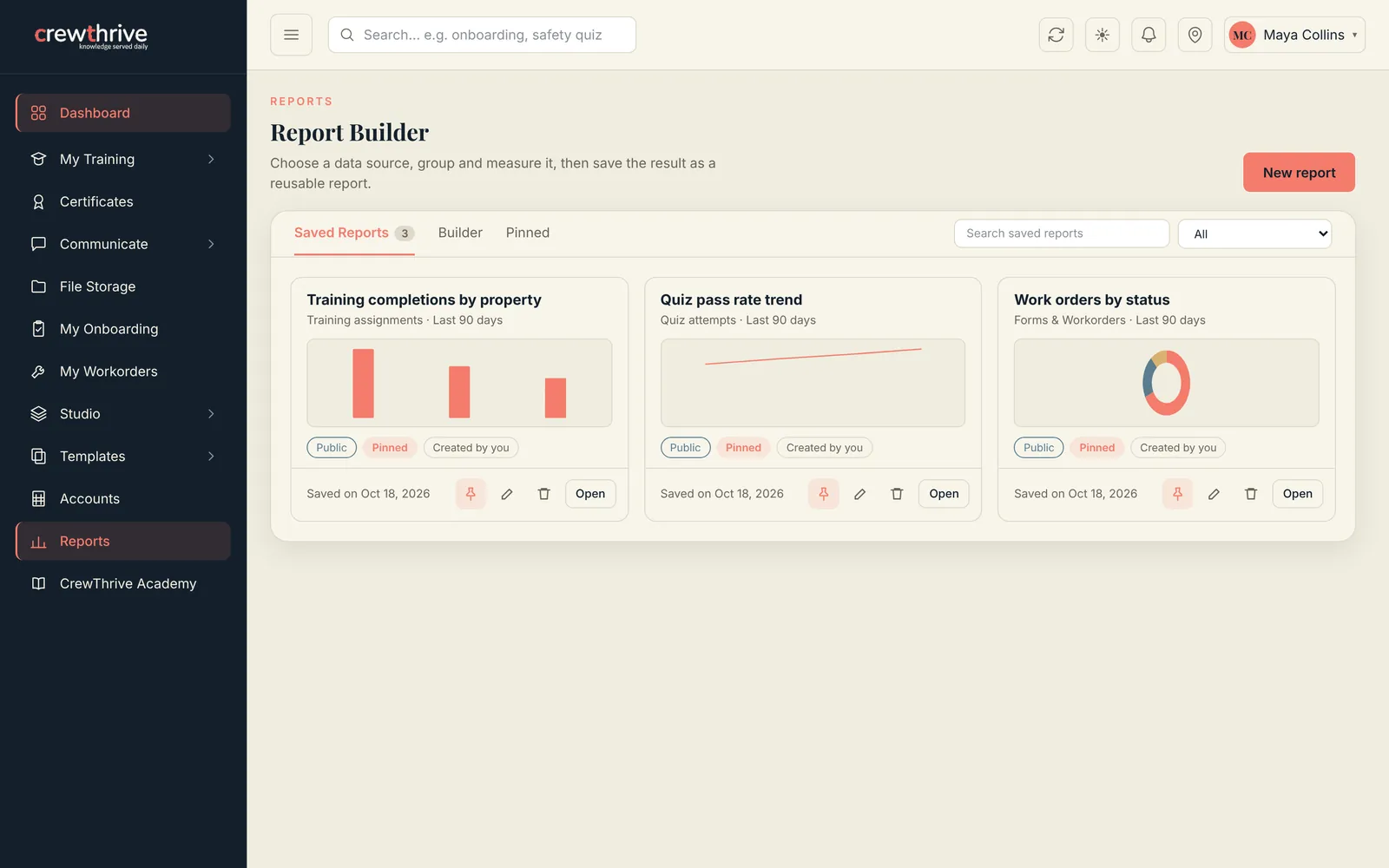
Frontline teams train and work between tasks, not at a desk. When manuals, quizzes, checklists and messages all work in the phone browser, learning fits into the gaps of a shift and updates reach everyone at once.
Shared mailboxes, announcements and document approvals keep communication in one place, with fewer missed messages and less back-and-forth.
Relative impact of each capability
Illustrative index (0 to 100) of where teams typically feel the biggest gains
Illustrative index for explanation only, not a statistical benchmark.
Start with one, then expand
You don't need to adopt everything at once. Pick the task that eats the most manager time, such as onboarding paperwork or repeated questions, automate it, measure the result, and build from there.
Key takeaways
- AI works best on repetitive work: creating, finding, tracking and reporting.
- Personalized training and paperless onboarding get new hires productive sooner.
- A knowledge base agent gives every team member instant, consistent answers.
- Dashboards and phone-ready tools keep managers informed and teams connected.
Ready to build a smarter workforce?
AI-powered training, onboarding, SOPs, work orders and workforce management in one platform.
Book a demoOr start your 6-month free trial. No credit card required.