
A training system is more than a folder of documents. It is the set of tools, habits and checkpoints that decides whether a new hire feels confident in week one and is still improving in year two.
When training lives in binders, group chats and whoever happens to be on shift, results depend on luck. A better system makes the right training easy to find, easy to finish and easy to measure. Here are six building blocks that improve onboarding, engagement, accountability and long-term workforce performance.
The six building blocks, in plain terms
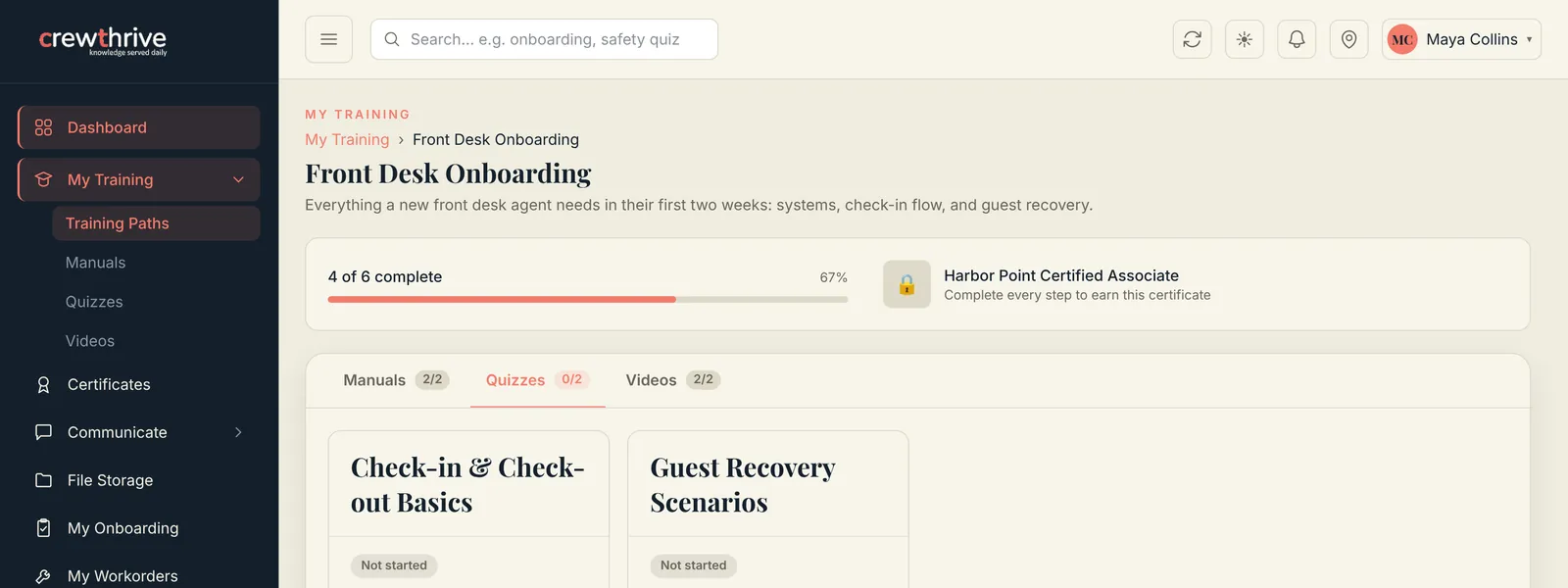
1. A clear, role-based onboarding plan
The first weeks decide whether a new hire feels set up to succeed. Replace informal shadowing with a defined path for each role: what to read, what to watch, what to practice and who signs off at each step.
- Day-one clarity: new hires know what to learn and in what order.
- Faster confidence: a visible checklist shows progress and builds momentum.
- Consistency: every hire in a role gets the same foundation, whichever manager or shift they land on.
2. One home for manuals, SOPs and videos
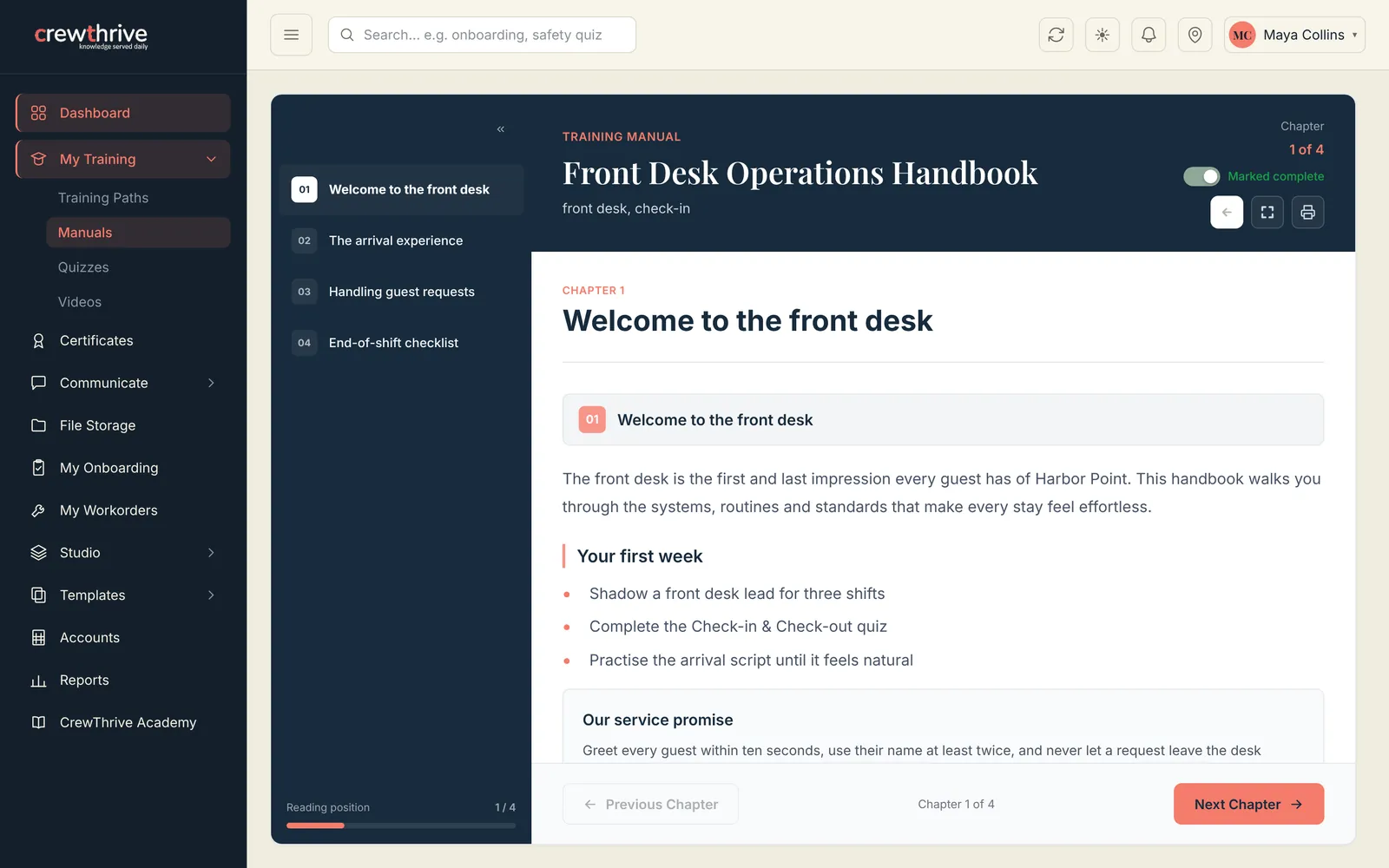
When procedures live in email attachments and shared drives, people follow outdated versions or skip them entirely. A single library of manuals, SOPs, templates and training videos gives everyone the same, current source of truth.
Revision history and approvals mean updates reach the whole team at once, so nobody trains on last year's process.
New hires fully trained, by month
Illustrative share of new hires who have completed all required training
Illustrative figures for explanation only. Real results vary by team, industry and setup.
3. Short, practical, phone-friendly lessons
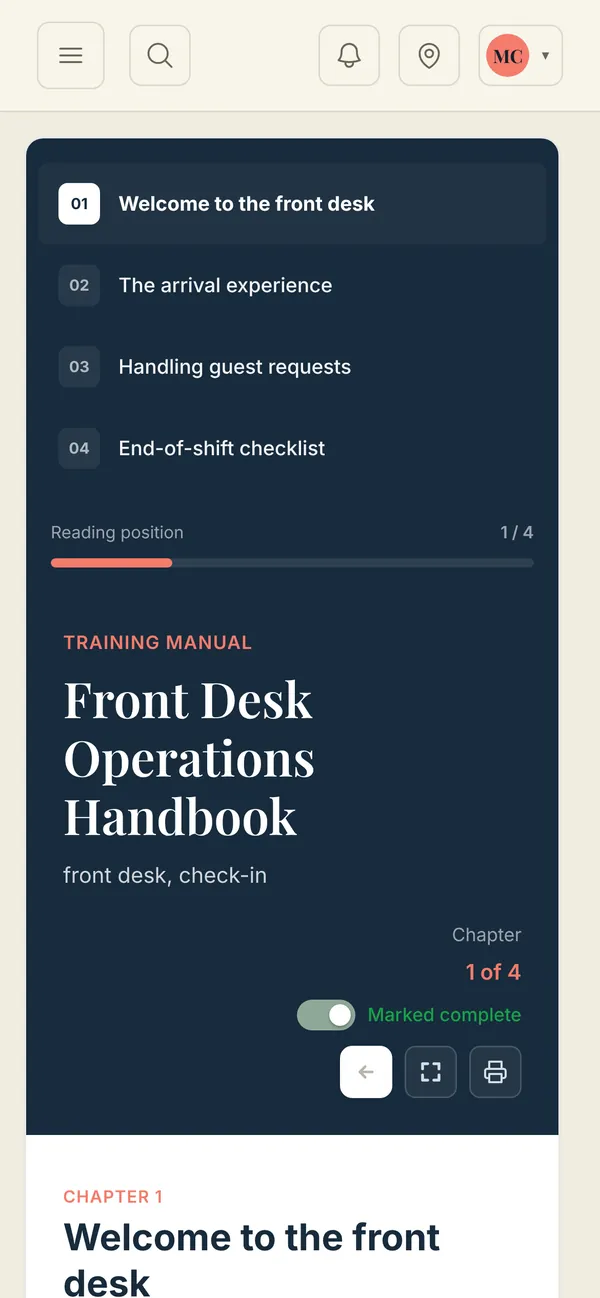
Frontline employees learn in the gaps between tasks, not in two-hour sessions at a desk. Break training into short chapters and checklists that work on the phone already in their pocket, and engagement rises because the effort is small and the payoff is immediate.
Mix formats to keep people interested: a short read, a quick video, then a practical checklist for the shift.
4. Quizzes that check understanding, not just attendance
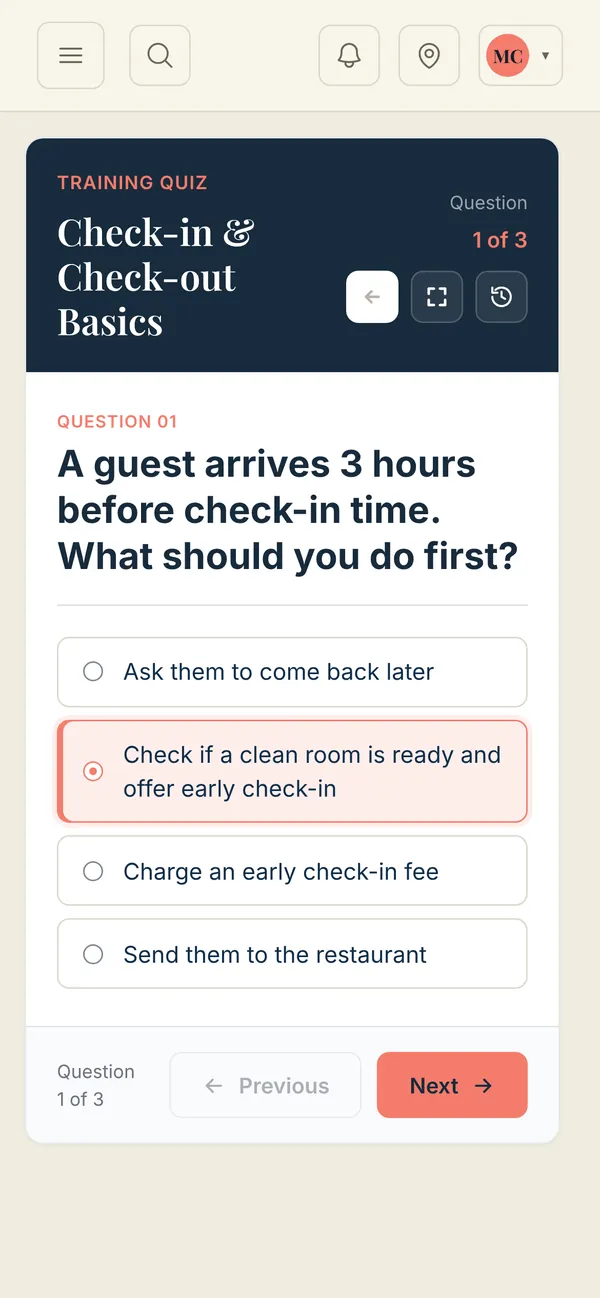
Completing a module does not mean someone learned it. Short quizzes after each step show what has stuck and what needs another look, and a quick refresher a few weeks later helps knowledge last.
- Quick checks: employees get instant feedback while the material is fresh.
- Targeted coaching: managers see which topics trip people up and can step in early.
- Lasting recall: spaced refreshers slow the natural drop-off in what people remember.
Knowledge retention over eight weeks
Illustrative share of training content remembered
Illustrative curve to show the concept, not measured customer data.
5. Clear ownership and visible accountability
Training only happens when someone owns it. Assign paths by employee, team or location, set due dates, and collect sign-offs and certificates automatically so completion is recorded rather than assumed.
When managers and employees can both see what is due, follow-up becomes a quick nudge instead of a month-end scramble.
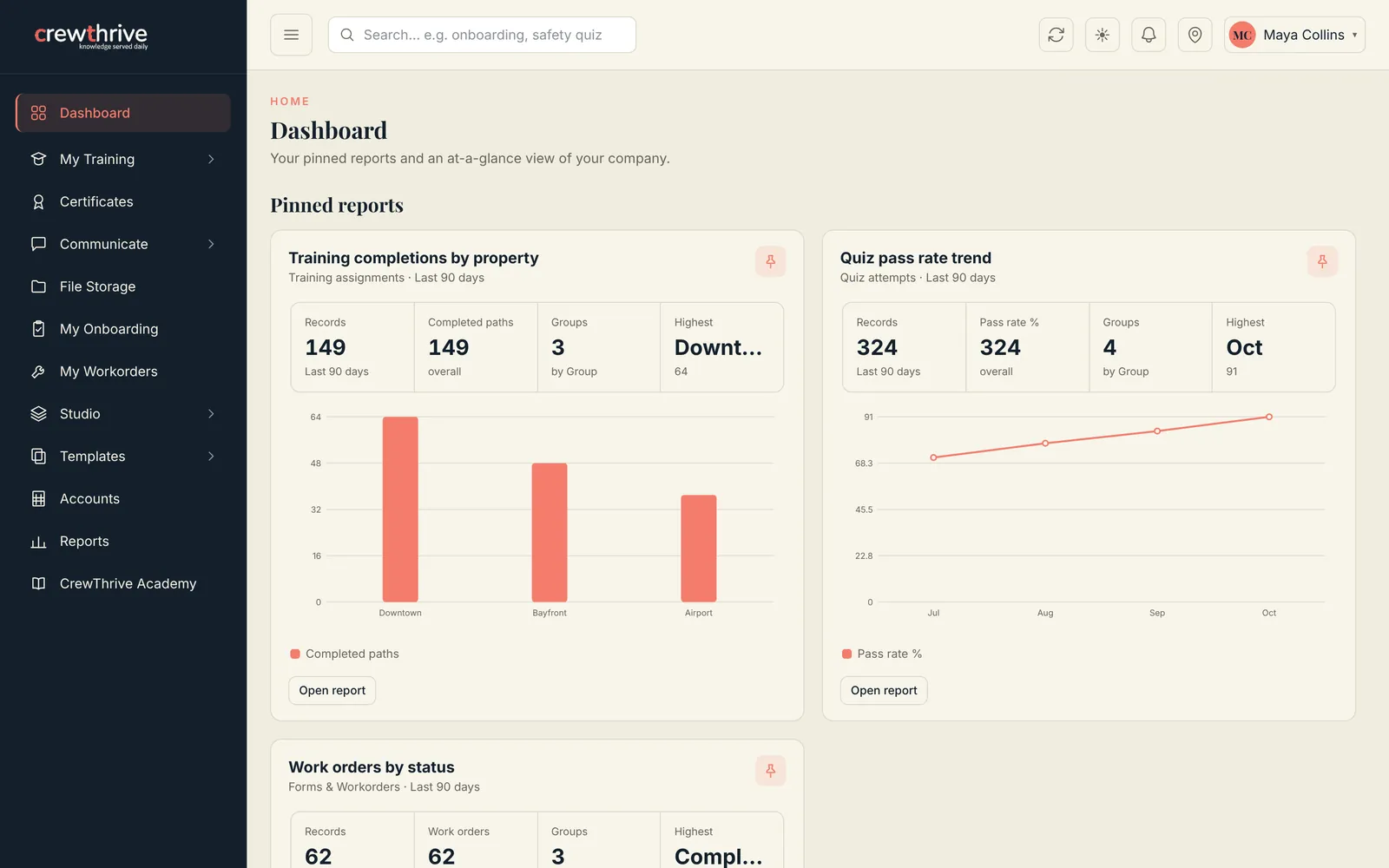
6. Measurement and steady improvement
A good system gets better over time. Track completion rates, quiz pass rates and time to full readiness by location and role, then use the patterns to fix weak lessons, retire outdated ones and spot where extra support is needed.
Regular reviews and audits keep manuals accurate, which protects compliance and service quality as the business grows.
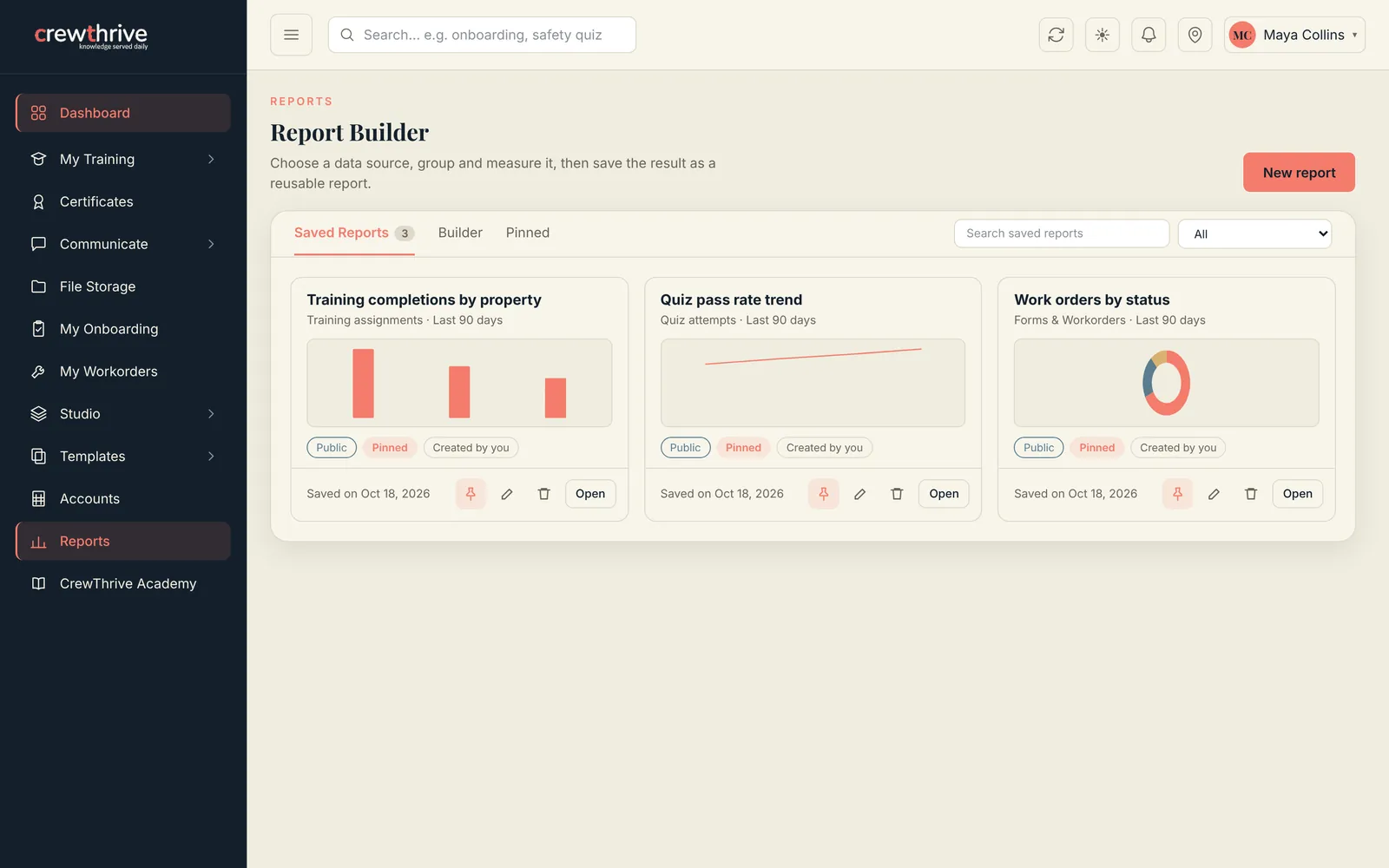
Relative impact of each building block
Illustrative index (0 to 100) of where teams typically feel the biggest gains
Illustrative index for explanation only, not a statistical benchmark.
Start small, then build
You don't have to rebuild everything at once. Choose one role, such as front desk or kitchen staff, build a single path with a manual, a quiz and a sign-off, and see how it performs. Then repeat the pattern for the next role.
Key takeaways
- Structured, role-based onboarding gets new hires confident and consistent sooner.
- One current library of manuals and SOPs ends the guesswork about which version is right.
- Short, mobile lessons and quizzes keep people engaged and help knowledge stick.
- Ownership, sign-offs and reports turn training from a hope into something you can measure.
Ready to build a better training system?
AI-powered training, onboarding, SOPs, work orders and workforce management in one platform.
Book a demoOr start your 6-month free trial. No credit card required.